



Our Experience.
How we tackle real operational challenges across different environments, combining data, technology and process improvement.
We partner with you and become part of your team.
Greenfield Digital Factory — IT/OT Integration from Scratch, Food Manufacturing
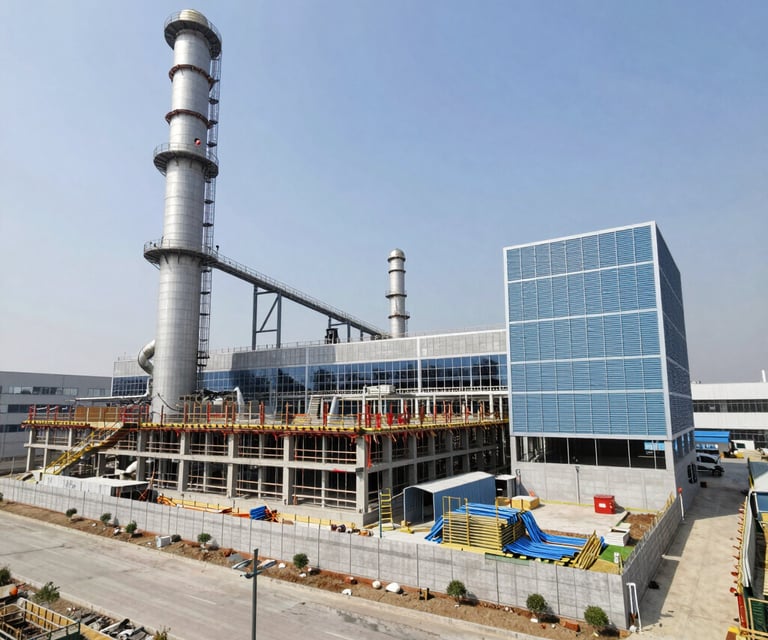
A European food manufacturer was building a new production facility from scratch with a clear mandate: run efficiently from day one, with no architectural debt.
How It Was Addressed
Operational Challenge
A European food manufacturer was building a new production facility from scratch. Every decision made in the early phases becomes infrastructure others build on for years. The risk wasn't technical failure — it was making reasonable decisions in isolation that would create fragmentation later. Multiple industrial vendors with systems never designed to talk to each other. Full IT/OT integration, traceability and intralogistics automation required from day one.
Governance of all technology decisions from the origin, before any system was procured. Collaborative workshops across operations, IT and industrial vendors to define a shared digital architecture. ISA-95 architecture with IEC 62443 cybersecurity designed upfront. Industrial platform selected for its native OPC UA, MQTT and ERP integration.
Phase 1 delivered end-to-end traceability and fully automated intralogistics: ERP sends the production order, a middleware layer translates instructions to OEM machines, automatic labeling generates SSCC identifiers per SKU, and AGVs transport pallets without human intervention. Production is declared back to ERP automatically, closing the loop. Full IT/OT network segmented by zones with DMZ implemented, operational from day one.
The visible part of a digital factory — dashboards, tablets, AGVs — is only 20% of the work. The real value is in what you don't see: architecture, integrations, security, and data governance.
Process digitalization and operational standardization in an industrial environment
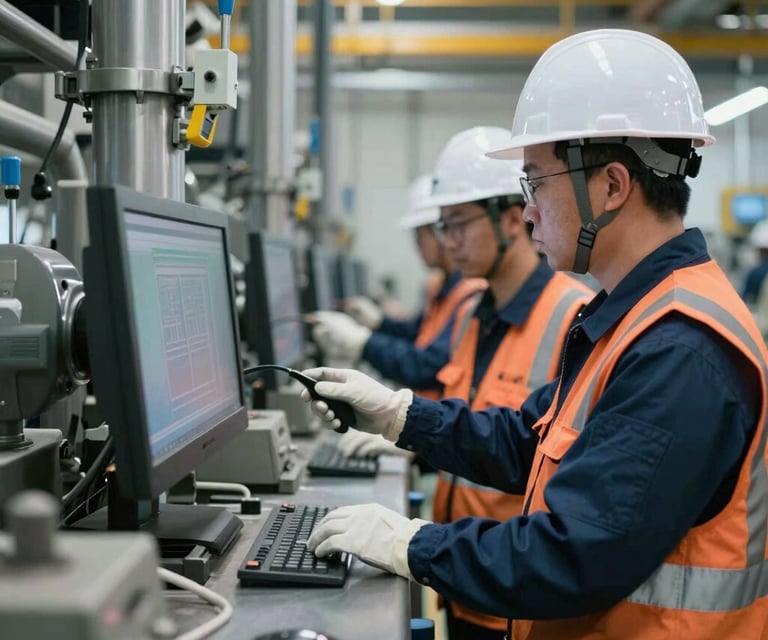
A plant with multiple production and support processes, where part of the operation relied on informal procedures, siloed spreadsheets and undocumented knowledge.
How It Was Addressed
Operational Challenge
Operational processes not standardized across shifts and teams.
Excessive reliance on individual knowledge.
Lack of traceability between operations, incidents and results.
Difficulty scaling improvements or replicating them in other areas.
As a result, the plant had no clarity on where time was being lost, why, or what to prioritize.
Analysis of key production and support processes.
Definition of clear and measurable operational workflows.
Digitalization of records and operational checkpoints.
Creation of indicators for performance monitoring and control.
The focus was not technology itself, but organizing operations and making them manageable with data.
Poorly classified downtime and unreliable KPIs
An industrial plant with multiple production lines and shifts, where operational information was recorded in an unstructured way with no shared view of actual performance.


How It Was Addressed
Operational Challenge
Downtime was recorded in an ambiguous and inconsistent way.
There was no clear classification of causes.
Operational KPIs (OEE, availability, performance and quality) were not calculated systematically.
Decisions were made based on perception or experience, not data.
As a result, the plant had no clarity on where time was being lost, why, or what to prioritize.
Consistent downtime classification, eliminating ambiguity and disputes over the real causes of loss.
Operational data generated automatically, reducing reliance on manual records and associated errors.
Digitalization of the operational management process, moving from scattered records to structured and accessible information.
Greater confidence in the data available to production and maintenance teams.
First reliable OEE and availability calculation based on consistent data.
Ability to prioritize improvement actions based on facts, not perceptions.
Operations shifted from manual records and subjective criteria to managing continuous improvement on a reliable digital foundation.
Technology orchestration and operational digitalization
A high-performance sports campus with multiple facilities, services and users, where sports operations, maintenance, technology and administrative management all coexisted.
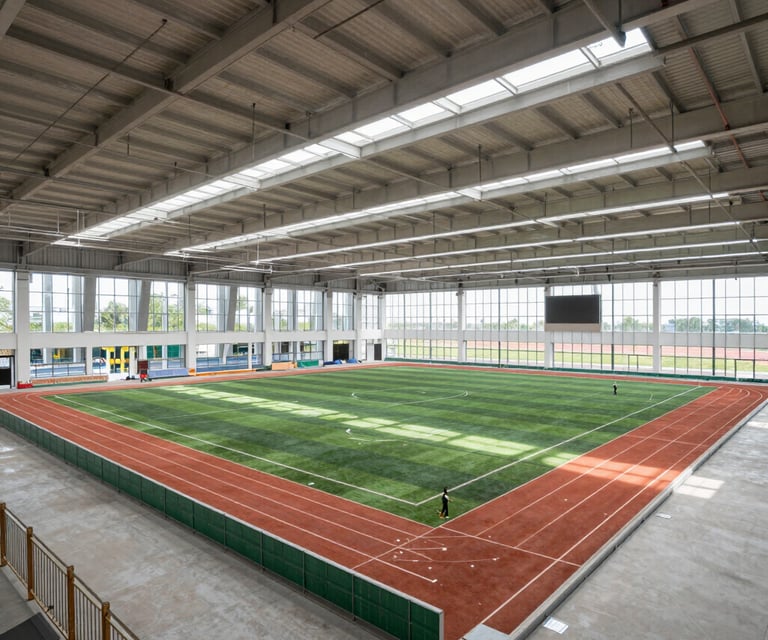
How It Was Addressed
Operational Challenge
Operations distributed across different areas with no unified view.
Heterogeneous technology infrastructure (network, servers, systems).
Reliance on multiple vendors with no clear coordination.
Difficulty aligning operational needs with appropriate technology solutions.
The challenge was not purely technical, but coordinating technology, operations and vendors under a single framework.
We took charge of the comprehensive design and orchestration of the technology layer, acting as an extension of the client and a single point of coordination:
Analysis of operational processes and real needs of the facility.
Definition of the technology architecture needed to support operations.
Selection and coordination of technology vendors as if they were the client's own.
Design and implementation of network, server infrastructure and management systems.
Integration of solutions (ERP and operational tools) aligned with day-to-day operations.
The focus was not deploying isolated technology, but building a coherent ecosystem that supported the actual operations of the facility.